The Workflow
The Workflow
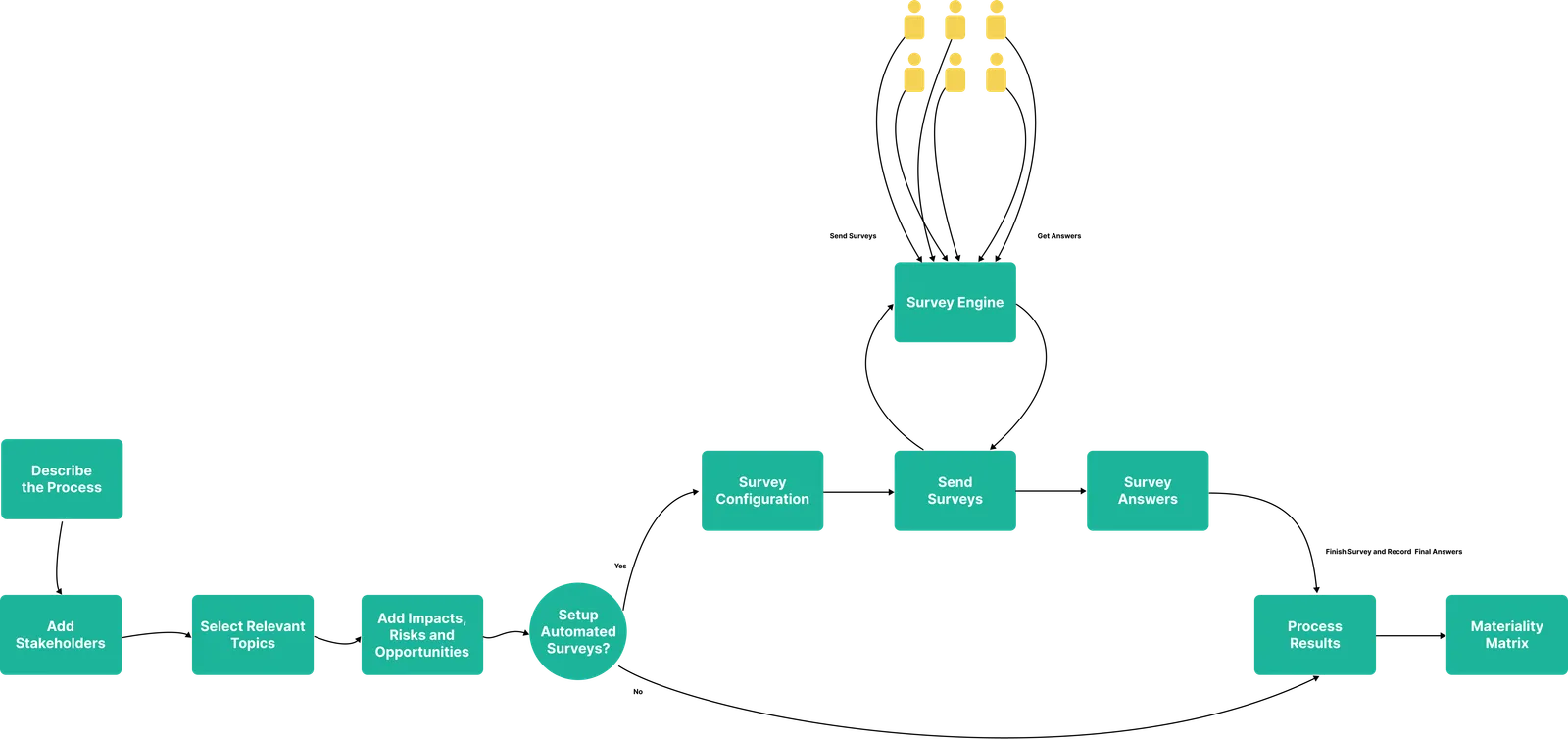
Section titled “The Workflow”The Double Materiality Assessment (DMA) module provides a workflow that empowers your organisation to conduct a materiality assessment in line with the European Sustainability Reporting Standards (ESRS). The workflow is divided into six key stages:
Watch this overview video to understand the six stages of the Double Materiality Assessment workflow. This guide will introduce you to each stage and its purpose, helping you gain a clear understanding before diving into specific tasks.
- General Information: Begin by establishing the foundation of your DMA with essential background details. Input general information about your organisation, including the reporting period, the scope of the assessment, and any specific sustainability goals or frameworks that guide your reporting strategy.stakeholders relevant to your sustainability journey. This step involves creating a stakeholder registry, categorising them (e.g., customers, employees, investors, suppliers), and noting their significance and influence on your organisation.
- Potentially Relevant Topics (Long-list/Short-list): Compile a list of sustainability topics that could be material to your organisation. This step is crucial for ensuring that no significant area is overlooked. The module will guide you through identifying these topics based on industry standards.
- Identify and describe Impacts, Risks and Opportunities (IROs): Probably the most important activity is to identify and describe IROs. You will have to fill in general and also ESRS-specific information for each of IRO. This way you can be sure that your descriptions are compliant and well-described.
- Conduct (Automated) Surveys: Engage with your stakeholders through web surveys to gauge their perspectives on the importance of each potentially relevant topic. The module facilitates the creation, distribution, and management of these surveys, ensuring a seamless data collection process.
- Results: Analyse the survey results alongside data gathered through offline methods such as workshops and interviews. This integrated approach ensures a holistic view of material topics.
- Materiality Matrix: Visualise the outcomes with a materiality matrix that plots the significance of each topic against its impact on your organisation and stakeholders. This visualisation aids in prioritising topics and identifying those that are essential for inclusion in your ESG report.