Value chain
Reporting Boundaries
Section titled “Reporting Boundaries”In the Mitigate ESG platform, we have introduced a new section called Reporting Boundaries. This feature allows all users to:
- Visualize the entity structure of their organization
- Input and manage value chain activities relevant to ESG reporting
Each part of this section is designed to support comprehensive and transparent reporting. Detailed explanations of the individual components are provided below.
Entity structure
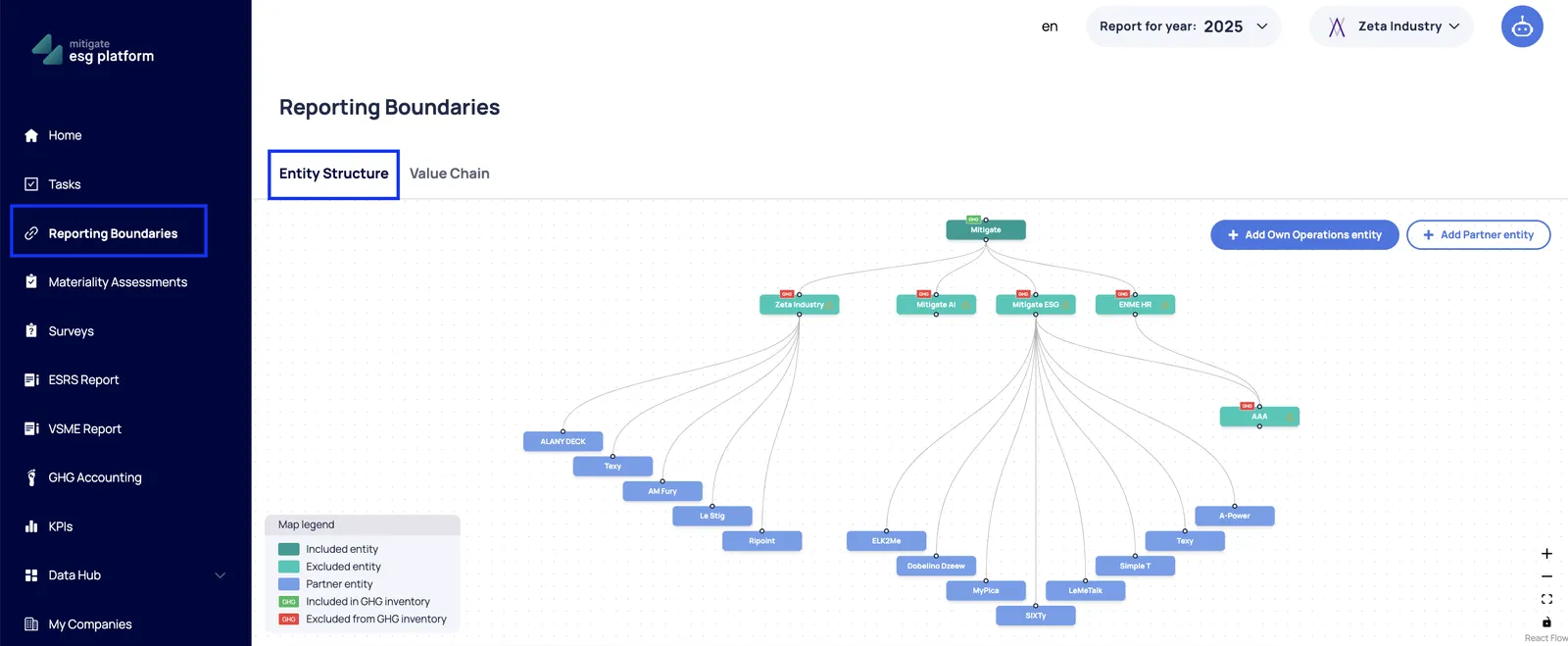
Users can visualize their company structure and also add Partner Entities to reflect relationships across the value chain.
For own companies, users have the ability to input additional information, including:
- Company details and requisites
- NACE codes
- Inclusion status in consolidated ESG reporting and GHG accounting
- Products and services offered by the company
- Contact information for relevant stakeholders
For Partner Entities, users can input the same set of information as for own companies, with the exception of inclusion in the consolidated ESG report and GHG accounting module, which applies only to the reporting company’s own entities.
It is very important to enter all data correctly and accurately. In the near future, we plan to expand the platform’s functionality to include the collection and integration of GHG data from Partner Entities.
Accurate and complete information now will ensure a smooth transition and reliable data flow once this feature is enabled. This will further enhance transparency and accountability across the entire value chain.
Value chain
Users have the option to include a value chain activity within the ESG reporting boundaries section:
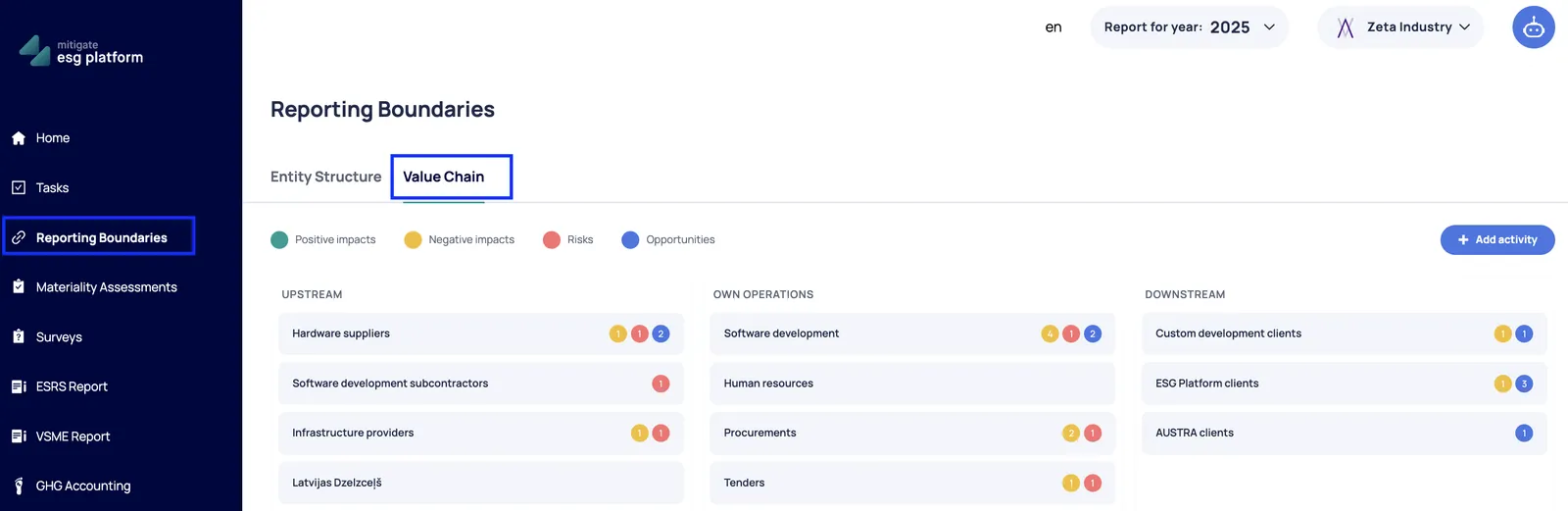
This view effectively highlights the number of IROs associated with each specific value chain activity, categorizing their impacts as either positive or negative.
Connecting the IRO to the Value Chain
For the DMA to be reliable, it is essential for all companies to analyze the associated impacts, risks, and opportunities.
ESG regulations require IROs to be examined with particular care, ensuring that they are also connected to specific value chain elements. Our ESG Mitigate platform enables users to link specific impacts, risks, or opportunities to various value chain items:
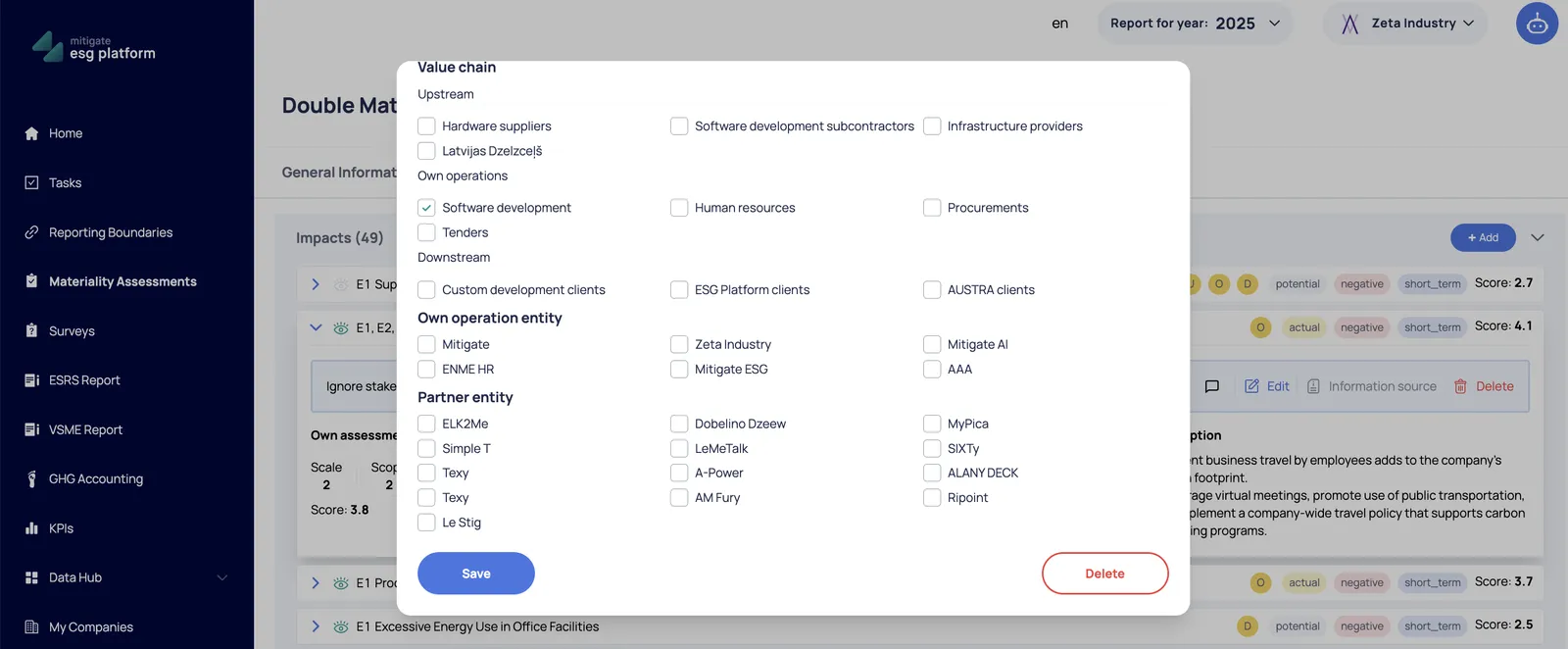
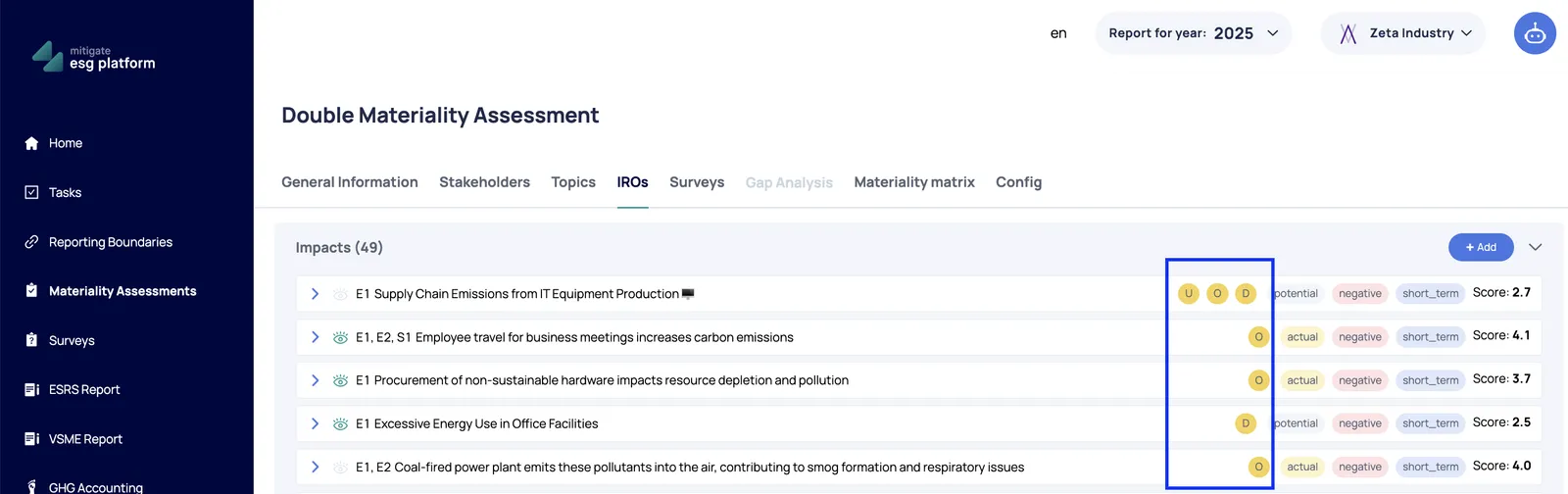
When reviewing IROs, it is highly beneficial for users to quickly see which stream a particular impact, risk, or opportunity is associated with—whether it’s linked to upstream, own operations, downstream, or multiple streams:
GHG Accounting for Own Companies
When creating a GHG report in the Mitigate ESG platform, it’s easy to add Scope 1, 2, and 3 emissions data for each group entity.
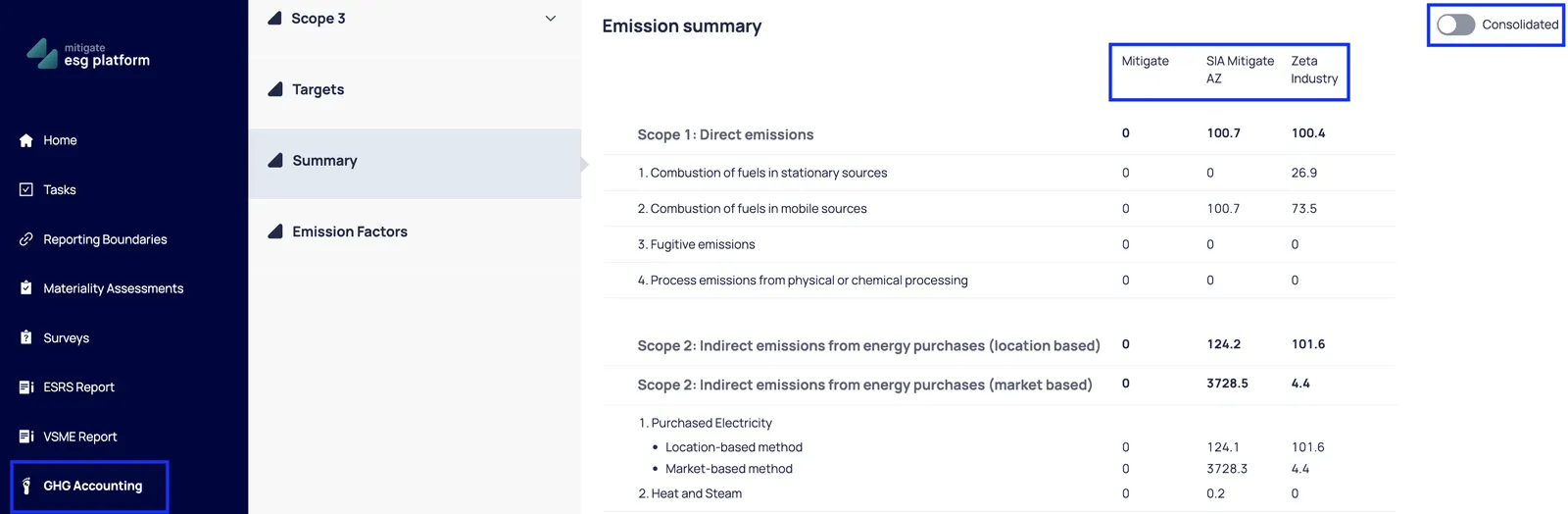
A particularly useful feature is the ability to review GHG accounting data either in a consolidated view—where data from all entities is aggregated:
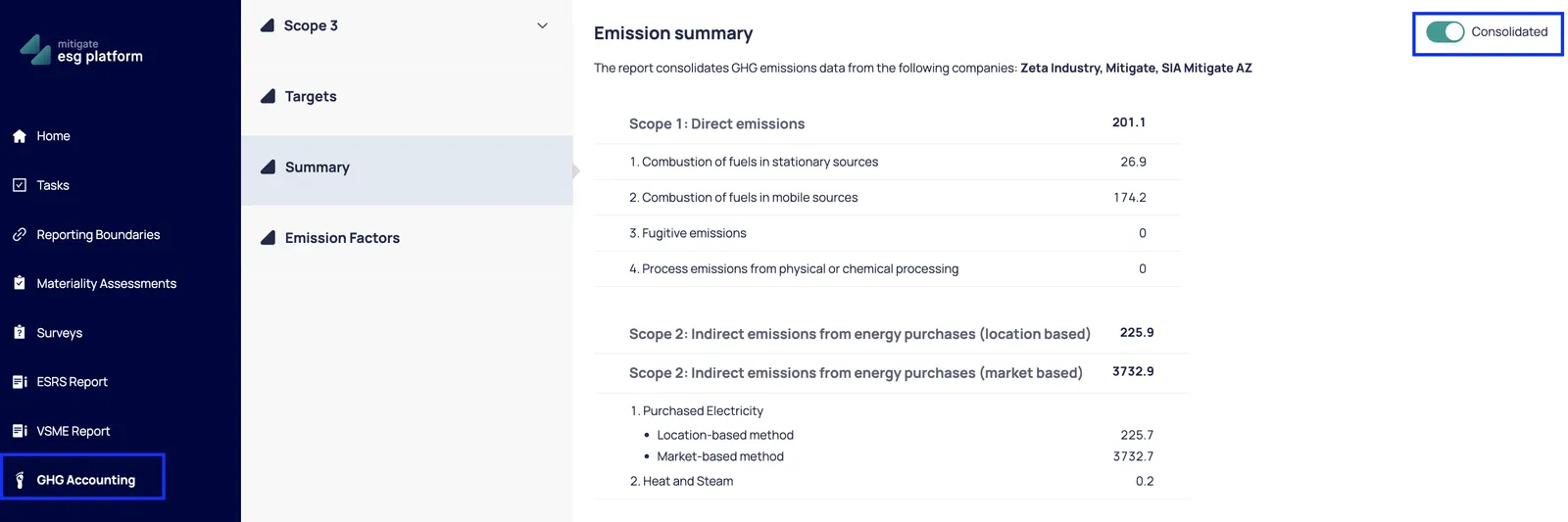
or broken down by individual company: