Potentially relevant topics (Long-list/Short-list)
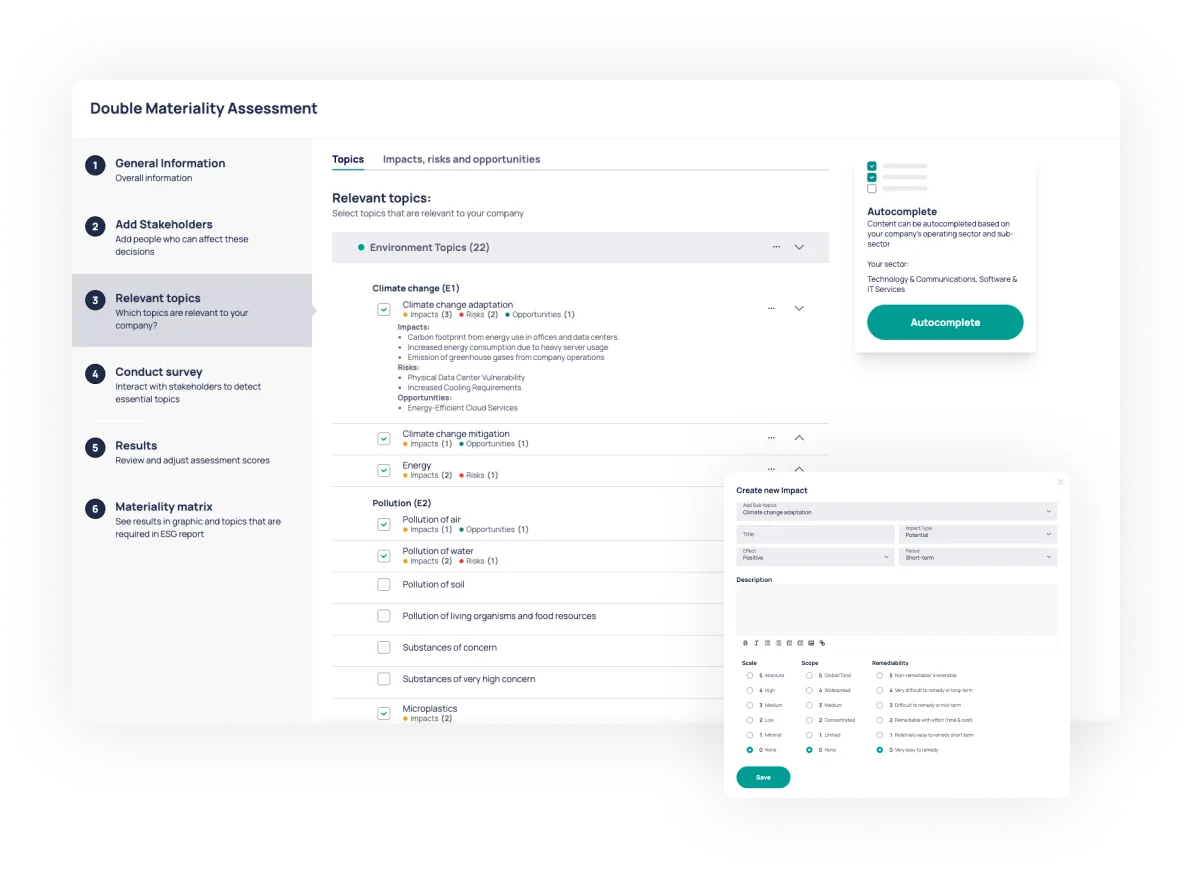
The “Relevant Topics” section is an essential part of the Double Materiality Assessment, designed to list and evaluate sustainability topics that may be material to the company:
- Comprehensive Topic List: Features a full array of materiality topics derived from the ESRS, serving as a reference point for the company to consider all possible areas of sustainability impact.
- Customisation of Topics: Allows users to enhance the standard list by adding specific impacts, risks, and opportunities associated with each topic, tailoring the assessment to the company’s unique context.
The topics chosen in this section will form the basis for the subsequent assessment, ensuring that the DMA focuses on areas of utmost importance to the company’s sustainability objectives.
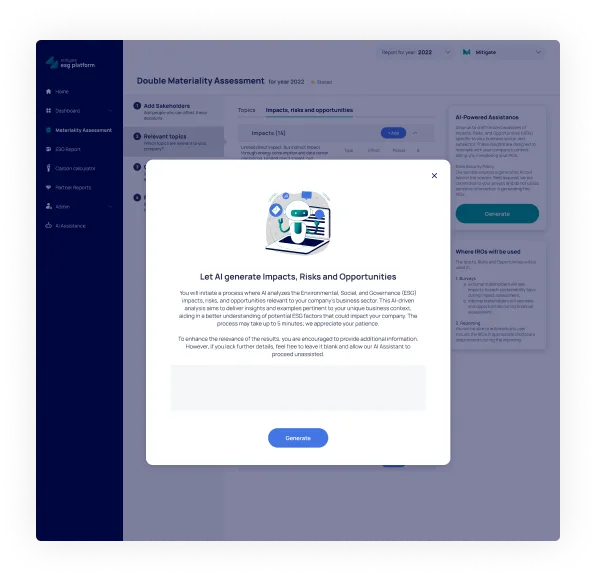
AI Assistant allows you to craft tailored examples of Impacts, Risks, and Opportunities (IROs) specific to your business sector and subsector. These insights are designed to resonate with your company’s context, aiding you in exploring your IROs.
Surveys
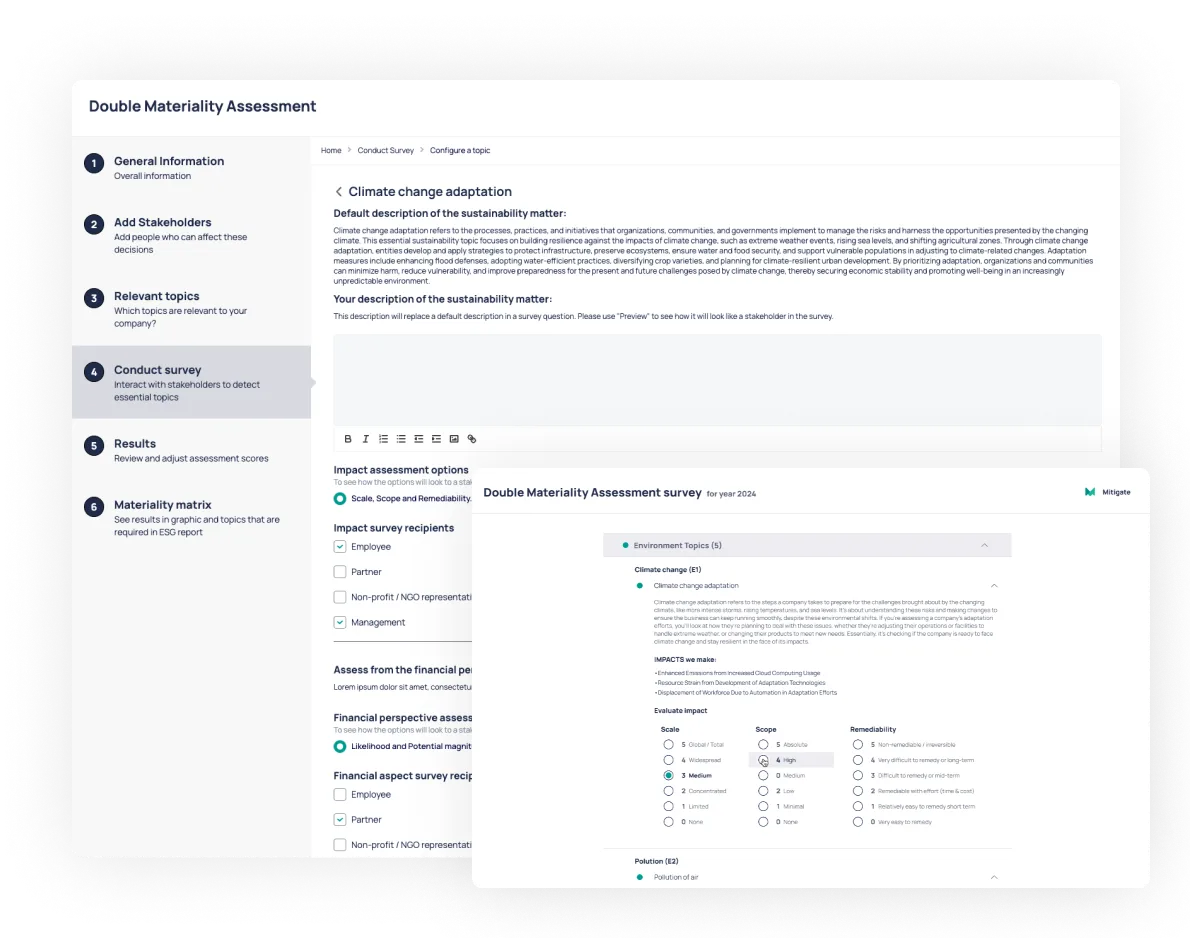
Section titled “Surveys”The “Automated Surveys” section streamlines the process of collecting stakeholder input on materiality topics through a structured approach:
- Survey Configuration: Allows companies to configure which topics are to be assessed by each stakeholder group, ensuring that the survey content is relevant and targeted.
- Survey Distribution: Facilitates the creation and dispatch of survey forms directly to stakeholders’ emails, simplifying the process of collecting their perspectives.
This section ensures that the assessment of materiality topics is conducted smoothly, with stakeholders providing their insights on the issues most pertinent to their relationship with the company.
Results
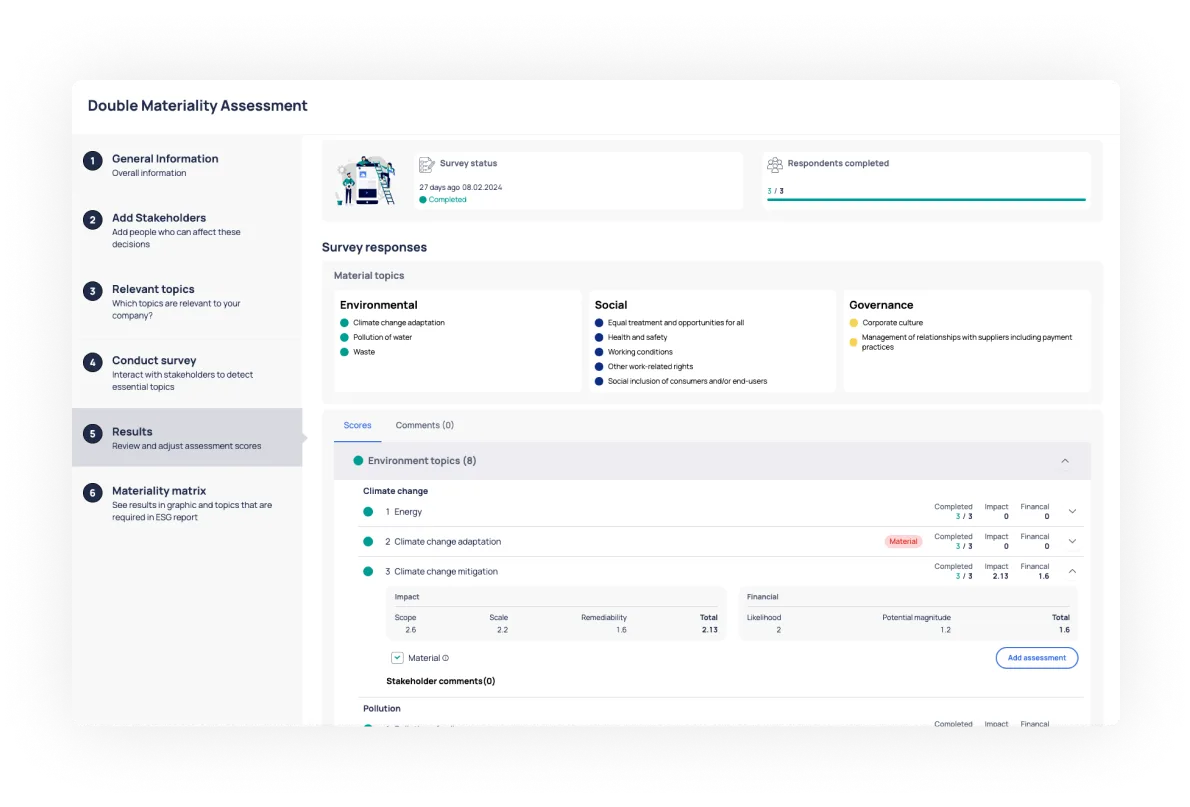
Section titled “Results”The “Results” section is where the outcomes of the Double Materiality Assessment are collated and analyzed:
- Assessment Scores Table: Presents a comprehensive table displaying scores for each potentially relevant topic, assessed from both Impact and Financial perspectives, as per the double materiality principle.
- Automated Calculations: The section includes an automated feature that calculates the scores and flags topics as material based on predefined thresholds and criteria, simplifying the identification of key material topics.
This section provides a clear and quantifiable overview of the materiality of each topic, enabling users to easily determine which issues are most significant for the company and its stakeholders.
Materiality Matrix
Section titled “Materiality Matrix”The “Materiality Matrix” section offers a visual representation and analysis for the results of the Double Materiality Assessment:
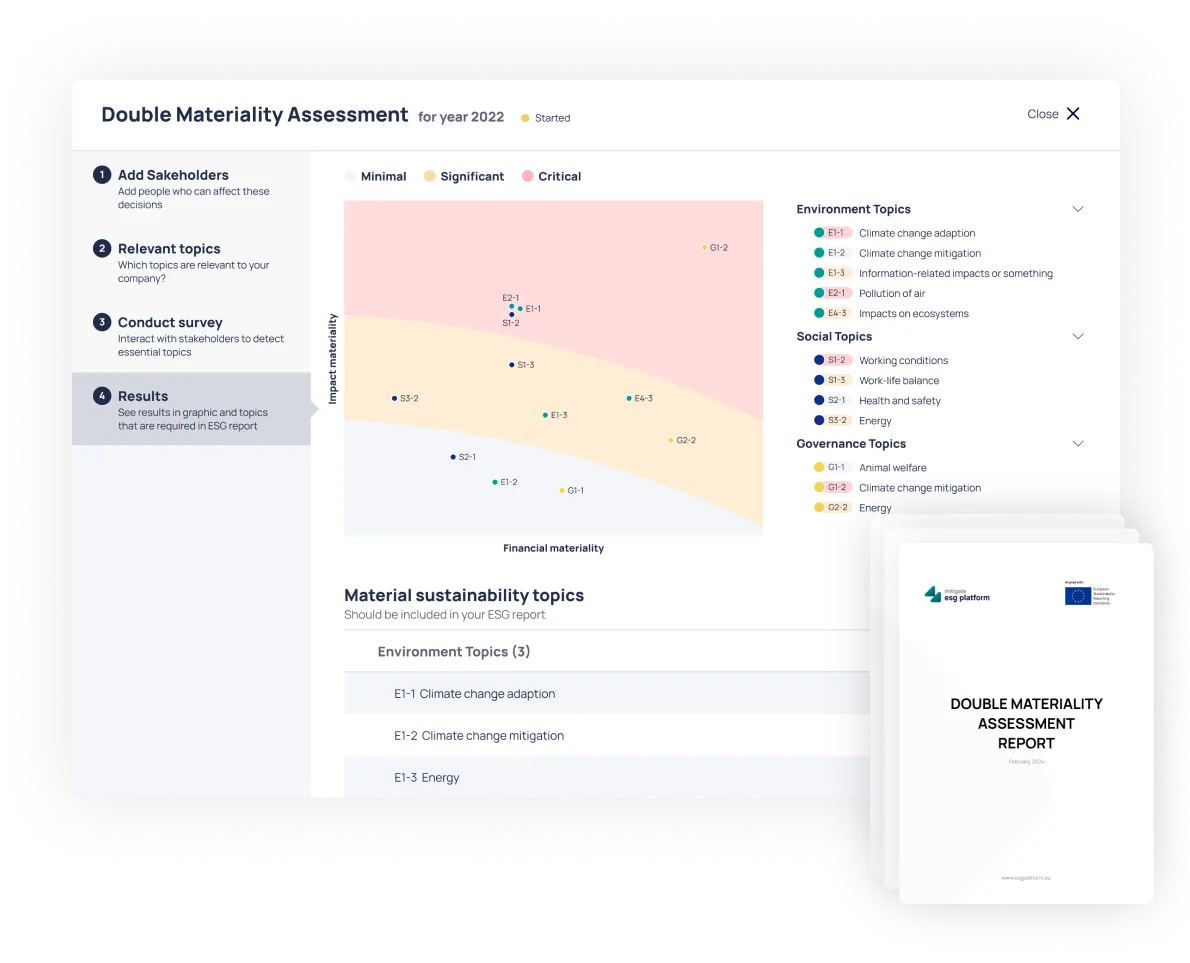
- Visual Matrix: Displays a graphical materiality matrix where topics are plotted based on their Impact and Financial scores, illustrating their relative materiality to both the company and stakeholders.
- Material Topics Identification: Helps users to identify at a glance which topics fall into the category of high materiality and therefore require attention and disclosure in sustainability reporting.
- PDF + XLSX Export: Includes functionality to export the materiality matrix into a PDF document, allowing for easy sharing, presentation, and inclusion in reports.